Work found me in, of all places, Maui in January, 2026 – the last project of a lovely partnership with a great organization we filmed with over the past 5 years.
I managed to bookended the work segment of the trip with two days where I could get out and explore. It was after all 40 years since my last visit to Maui, so it isn’t somewhere I get to often. Being a remote set of islands, it presents a totally unique set of ecosystems and species, a handful of which are endemic to the archipelago. With only two days spare, I decided to try my luck on Maui one of the days and move to the big Island, known confusingly as Hawaii island and try to see how my luck fares.
MAUI, January 19th, 2026
Hosmer Grove, Haleakala NP
I started early by driving up to a well known spot called Hosmer Grove, a relatively small pocket of a much larger expanse of high altitude deciduous forest within the Haleakala National Park. It was here that I had the highest chance of seeing the various honeycreepers that can be found on the island, in particular the Maui Alauahio, a bird only found on this island.
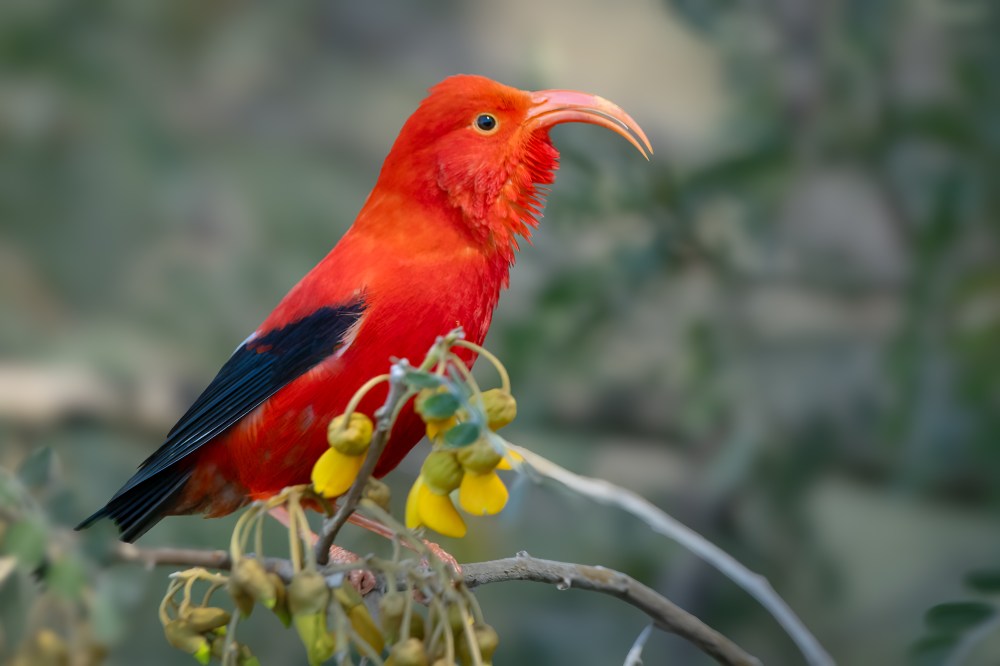
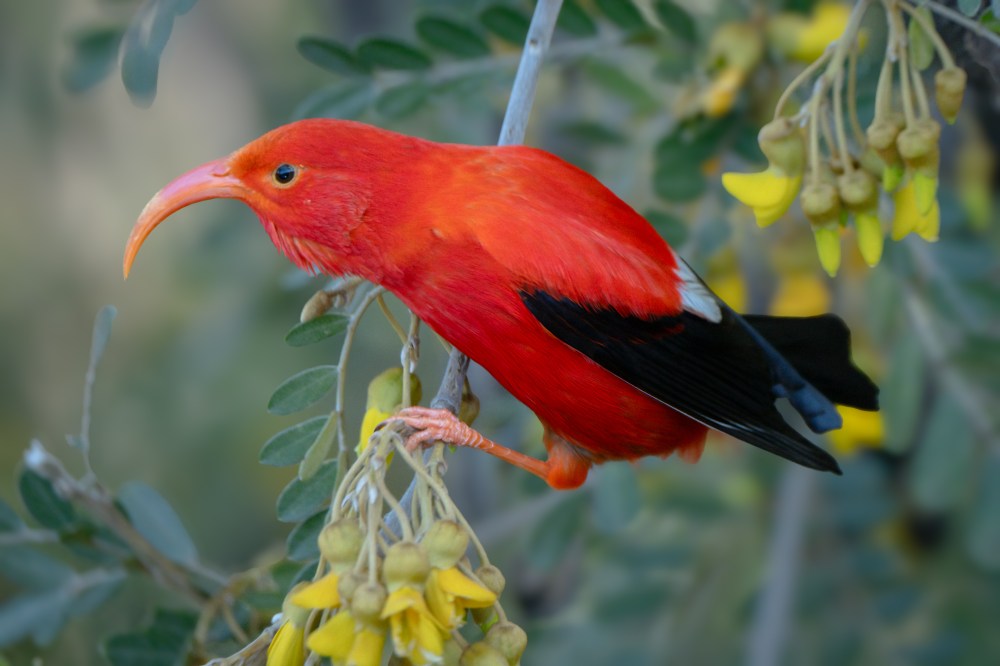
Pulling up to the small car park, I met a lovely chap called Nathan who was quick to introduce me to one of my new favourite birds, the I’iwi. These super charismatic and large honeycreepers are a celebrated species across Hawaii, with their iconic bright red and black plumage with a flash of white on the rump. Not to mention a beak that would have made Darwin very excited. Nathan was an awesome help, pointing out the various calls that started to permeate the initial excitement I had getting out of the car. It’s always overwhelming getting to a new place and being inundated with new calls but here, as the diversity is pretty low, it wasn’t like waking up in Costa Rica for example. It was a lot kinder on the short term memory skills.
The car park gave me a couple other lifers. First off a pair of Hawaiian Goose, or Nene as they are known locally, have made the spot their home. An incredible species that were close to going extinct when I was a child. I remember reading about this compact geese in desperate pleas for conservation funding in the 1990s. Now look at them. It seems the pleas worked as they have bounced back and have become a sense of pride for the Hawaiian people. No one touches a Nene and gets away with it.
The other species flitting around the car park was the red-crested cardinal, one of a significant number of introduced species to the island, but one I was super happy to see as they are stunning birds. They originate from Brazil but were introduced to the islands as cage birds in the 1920s and 1930s, and are now an established species.
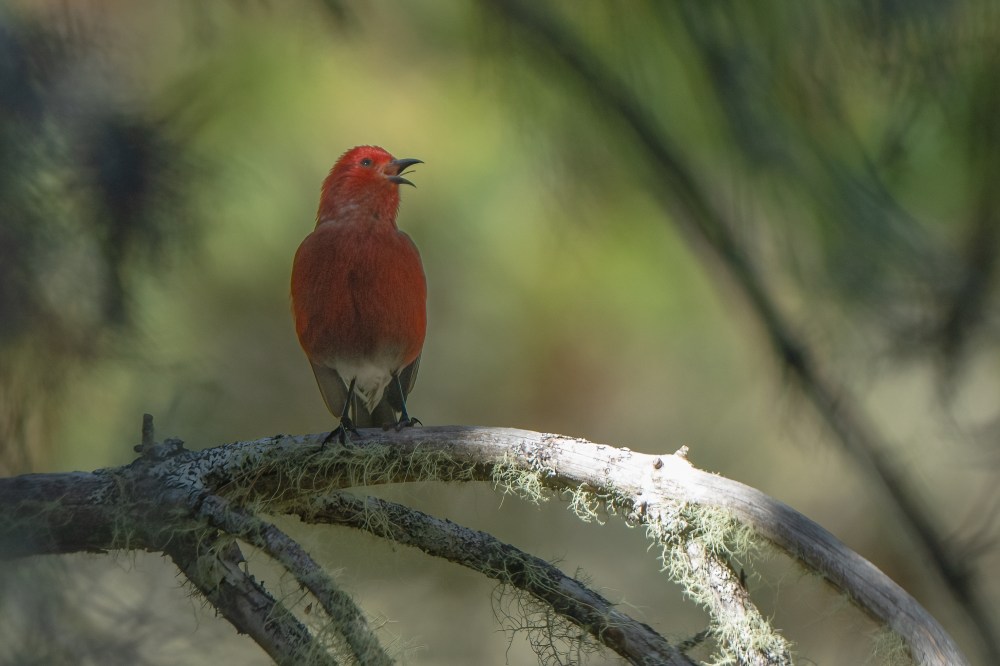
Whilst watching the I’iwi, we started to see a few of the other stars of the show: Apapane and Hawaii Amakihi. These remained higher up allowing neck-breaking views so I was keen to walk around the trail and see if I might get a better look.
Nathan gave some great tips on where to stand to increase chances of seeing the Maui Alauahio but did also manage my expectations reminding me they are a slightly tricky bird to identify let alone see. With that, I went off on my first circuit of the Hosmer Grove trail. I soon connected with more apapanes and amakihis, now at canopy height thanks the sharp slopes next to the trail. I tried in the spots recommended for the alauahio but alas, nothing yet.
I continued this pattern for a few more tries, meeting an array of lovely people, some with a long history with the site, others passing through on similar missions to me. Another introduced species popped up, a red-billed leiothrix, a bird that is slowly dominating the globe, spreading across Asia, Europe and now here.
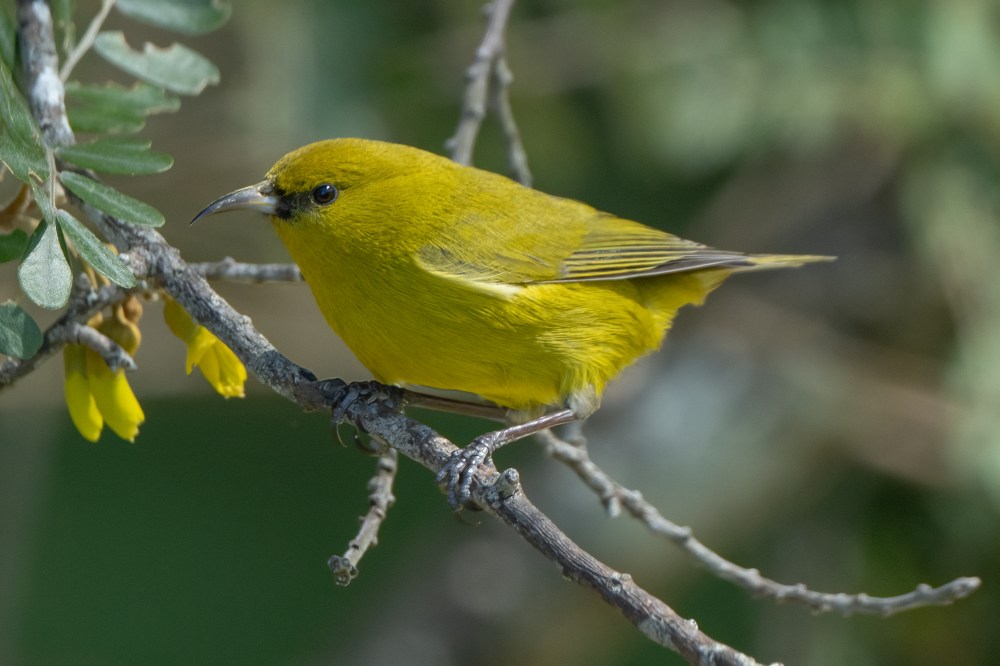
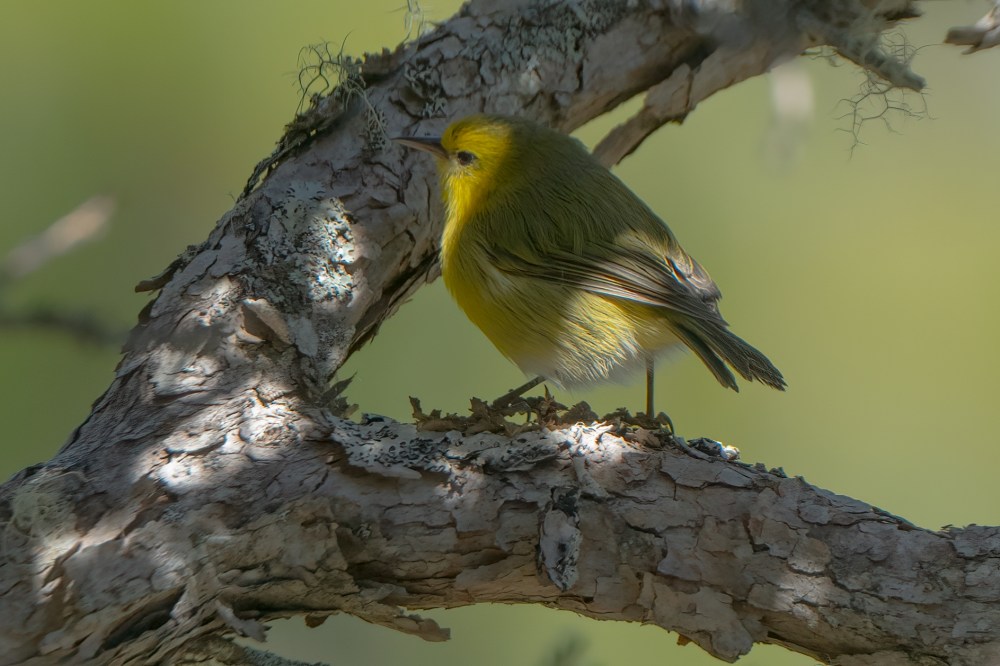
So, with a few rounds under my belt, I decided to stay put at the best spot for alauahio and wait…and wait I did. Not too long compared to some of the waits I’ve succumbed to for other species, but when your day is limited, it feels longer. An hour in, I noticed a small yellow bird behiving slightly differently to the other honeycreepers and remembered Nathan had mentioned the alauahio stay quite concealed and almost dance across their favourite flowers. Was this little bird my quarry? I managed to get a few record shots and zoomed in. The bird was lacking the mask of amakihi, and had a straighter beak compared to that species too. I had hit the jackpot.
With that, I headed down the volcano, stopping a couple times to admire the view and remind myself how lucky I am being to see the world like this. Those couple of stops produced tons of Eurasian skylarks, another introduced species, and one I hear from my house back home, and also my first Pacific golden plover. There are supposed to be a few of the subspecies of short-eared owls around this area but I had no luck.
Ho’okipa Beach
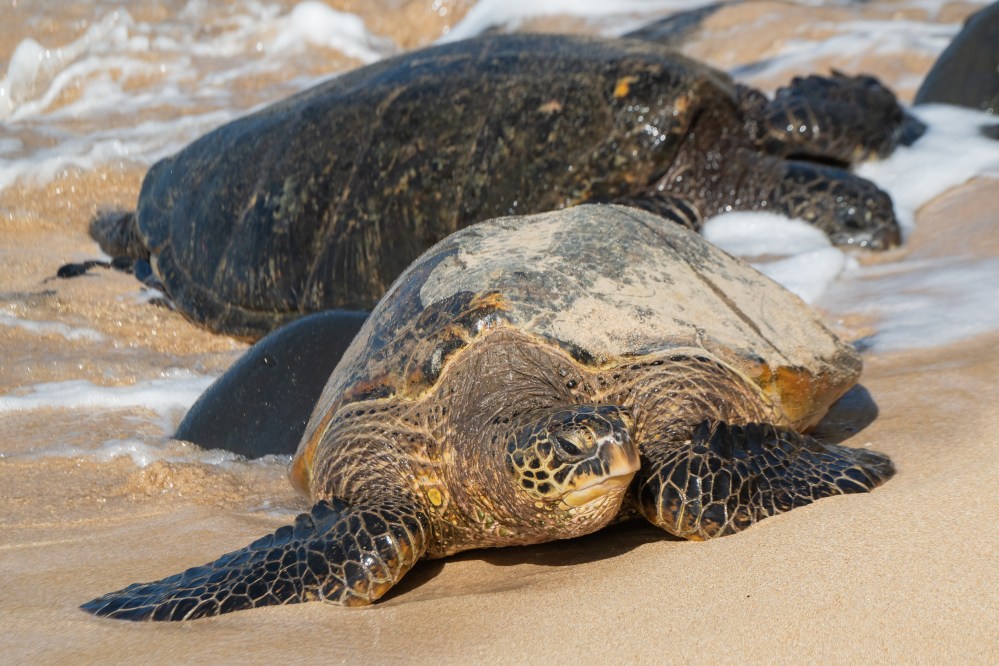
I decided to make a quick stop at the beach renowned for its basking green sea turtles. It was crazy busy there, especially as it was a public holiday, but I quickly spotted my first green sea turtles heaving itself up the beach. Incredible watching them transform from the gracious swimmers they portray approaching the beach, to the almost immobile, luggers of self as they search for a spot to bath. It is one of the only places int he world where green sea turtles do this. No wonder the Hawaiian people feel so connected to this animal. They really are special.
Keālia Ponds
My last stop of the day was to be Keālia Ponds, the spot on the island to see stilts, ducks, herons and a few other species as I was to find out.
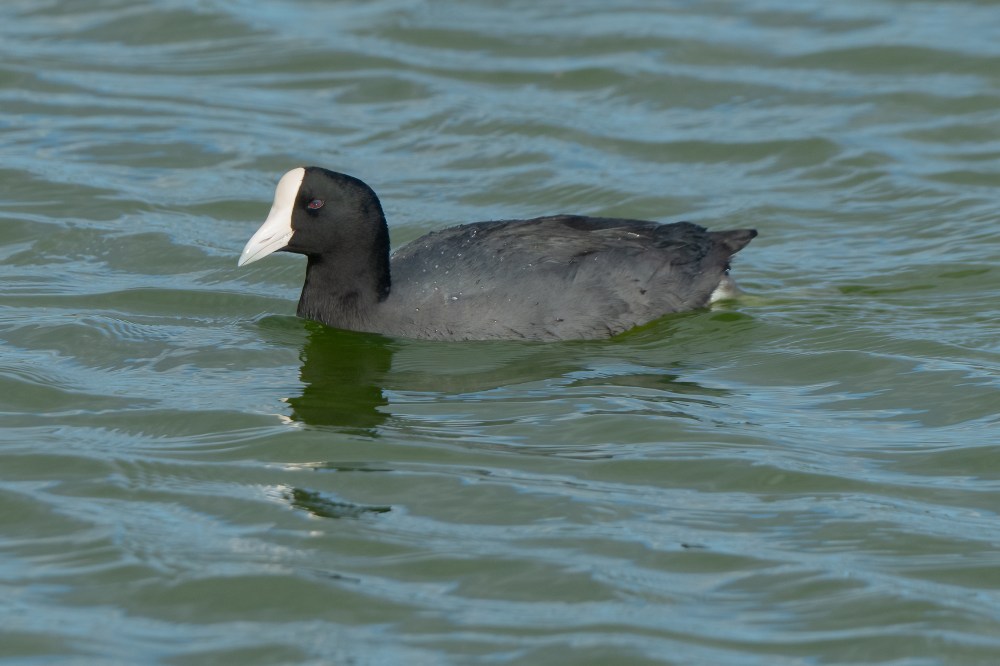
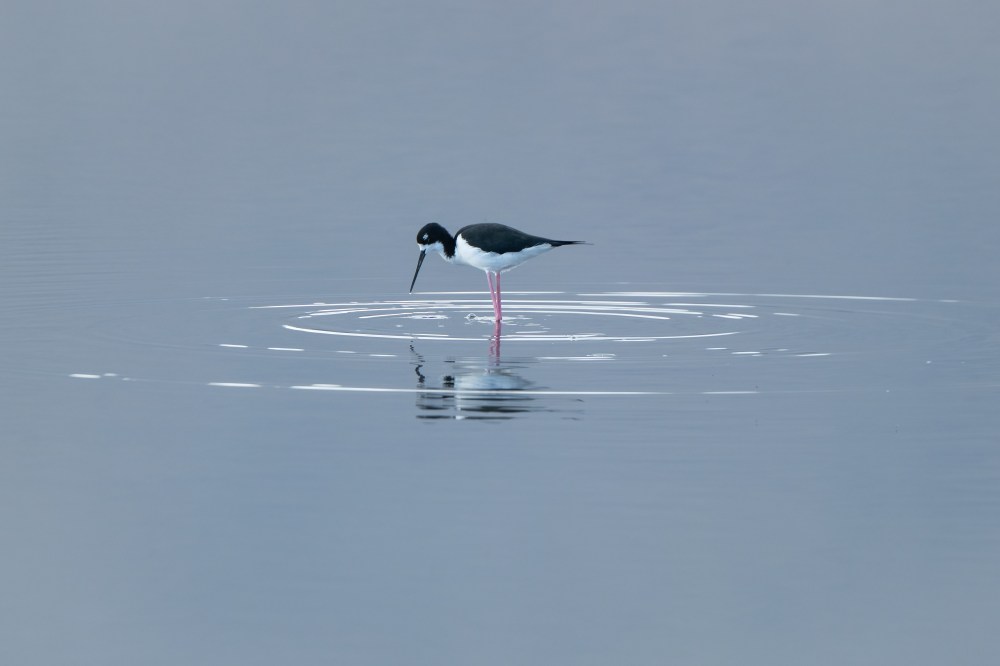
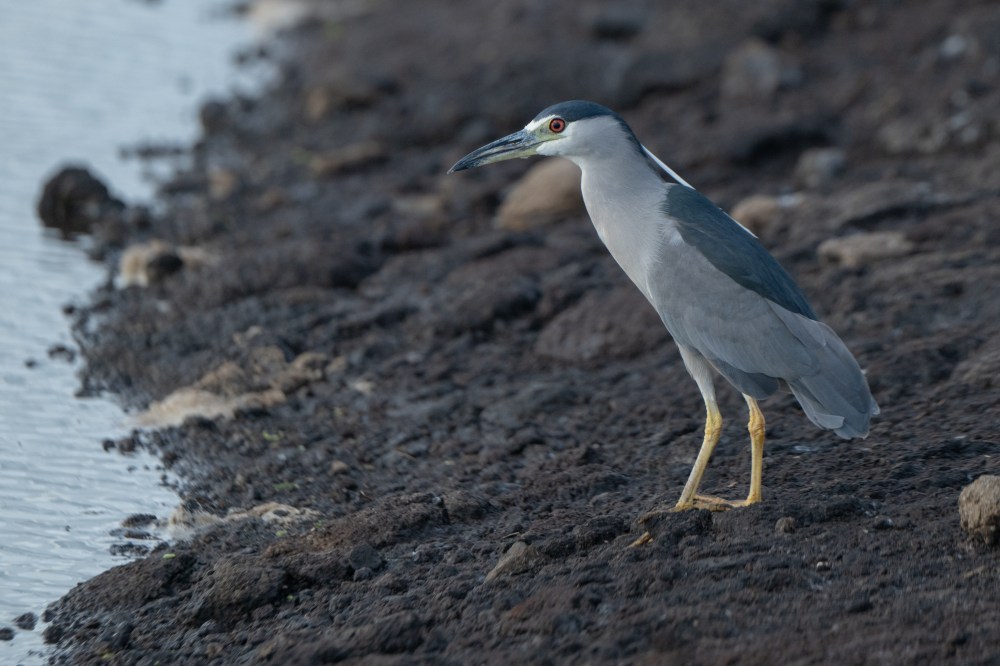
Driving in I spooked a black francolin, another introduced species which was followed on my list quickly by a grey francolin, also introduced. Strange seeing them here but they have made themselves at home. I carried on down the track right up to the water’s edge. After a quick chat with two staff who were using their public holiday to do some renovation work – hats off to public servants! – I ventured around the salt pools quickly picking up golden plover, the Hawaiian black-necked stilt subspecies, tons of black-crowned night herons, a wandering tattler or two and a bunch of pintails and shovelers further out on the water. The next endemic for me, and they were plenty in number, was the Hawaiian coot, a bird very similar to ours in Europe but for a larger white shield.
On the way out I decided to park up by the visitors centre and walk back along the road to see if any if the other introduced species were around. I quickly found African silverbill, common waxbill and Java sparrow, the latter of which is doing very badly back in its Java territory, and begs the question on the benefits of introducing species sometimes elsewhere. I won’t get into this here.


All in all, a fantastic day and one that gave me 12 lifers.
HAWAII, the big island, January 23, 2026
Once filming was wrapped, I made the 45-minute flight over to the big island, Hawaii, immediately east from Maui. Flying into Hilo, I could already tell it was a very different climate to where I had been. There was a bunch of excitement on the flight as one of the volcanos on Hawaii had been erupting on and off the past three weeks and had shown significant activity in recent days. It sounded incredible and I was sad I couldn’t spare time to get up there to see it.
I picked up my jeep and headed over to my hotel for the next two nights, not far from the airport. After a good night’s sleep I woke up early and made the 45 minute drive up the volcano to my meeting spot where the awesome Lance Tanino, bird guide and all-round naturalist extraordinaire, would start his tour. After saying hi, Lance quickly pointed out the call of the Erckel’s spurfowl, you guessed it, another introduced species. Once the four other birders had arrived, I followed Lance along a dirt road deep into the Hakalau Forest NWP.
Hakalau Forest NWP
Once in a while you’ll visit somewhere so beautiful, you know it will be forever burnt in your memory, and somewhere you might even imagine yourself in whenever your mind needs a break. Hakalau is one such place. With its beautiful plant biology, changing within metres of altitude, its high population of honeycreepers, its other very cool endemic species – this place is special, and it was obvious that Lance thought so too. Thanks to a bunch of conservation work, this expanse of high altitude native forest wasn’t even here decades ago. What were tiny fragments of forest, are now connected via replanting schemes. Thanks to the native trees being super fast growers, the forest now stretches for miles and has brought back bird life from the brink.
We spent the whole morning and early afternoon here and saw “the royal flush” as Lance put it: Hawaii creeper; Omao; Akiapolaau; Hawaii Elepaio; I’iwi; Apapane; Amakihi and Hawaii Akepa. Both the akepa and akiapolaau are very sought after birds and I felt lucky to be in their presence.
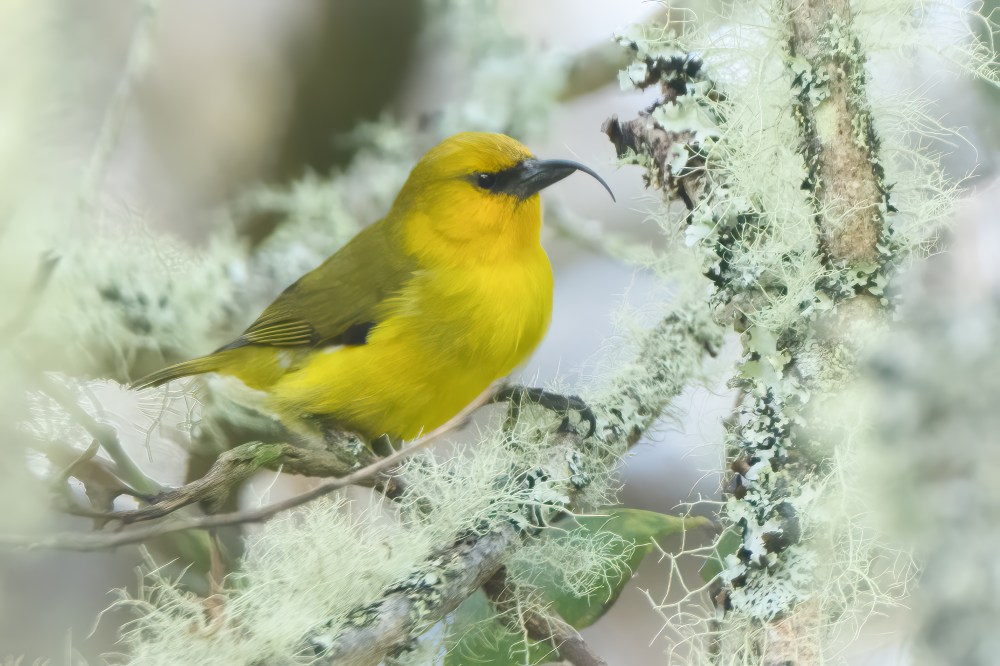
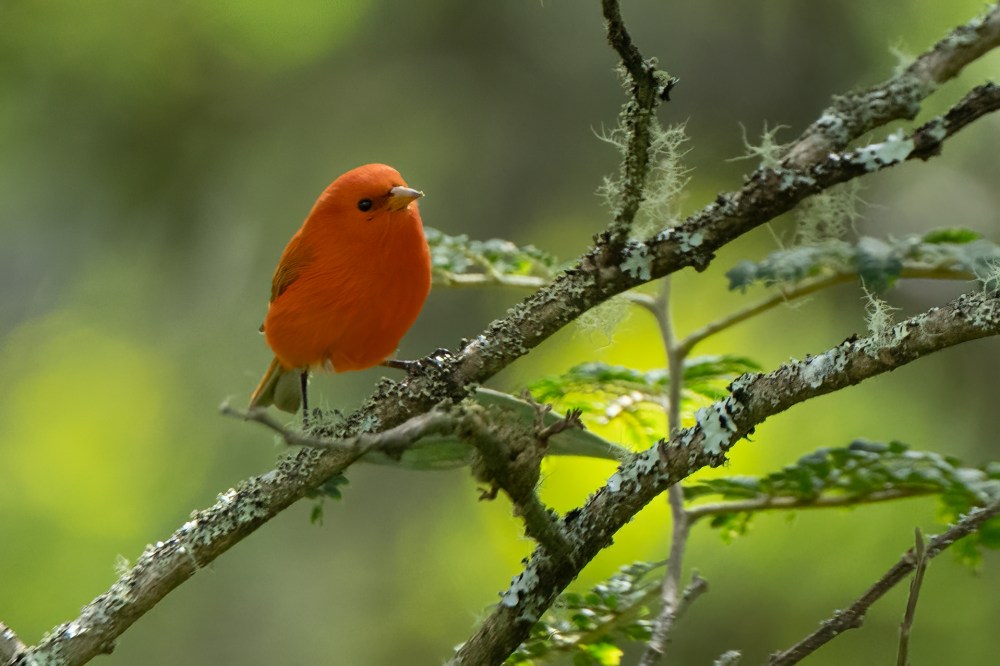
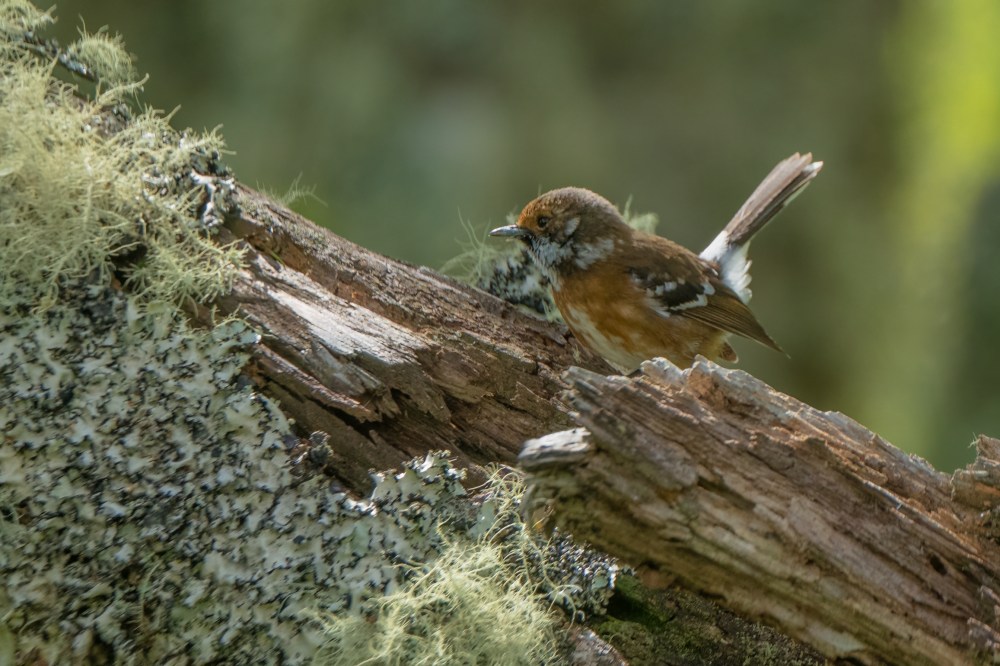
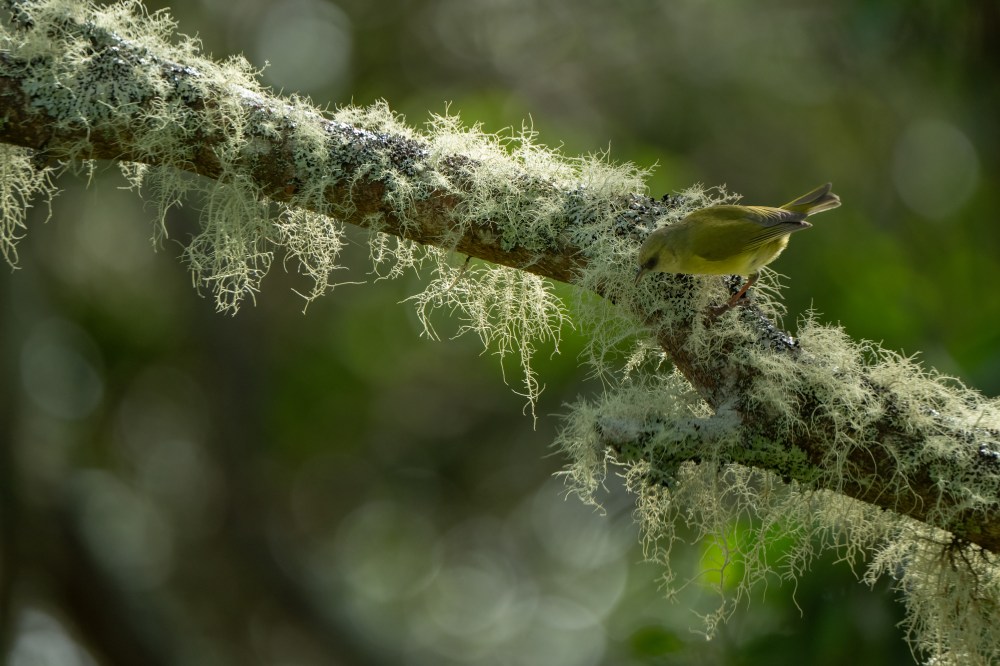
We also managed to pick up Hawaiian hawk, another endemic plus a few introduced species such as the gorgeous Kalij pheasant, warbling white-eye, Japanese bush warbler and red-billed leiothrix. Of course, we were also never too far away from a Nene or two.


I can’t recommend Lance enough – do get in touch with him if you’re looking to bird in Hawaii. This guy knows his stuff and cares deeply for the natural history of the islands.
Wailoa River SWP, Hilo
After leaving Lance and the gang, I decided to get somewhere I might be able to pick up a few more of the introduced species, most notably, the yellow-billed cardinal, a species that’s up there with its red-crested cousin.
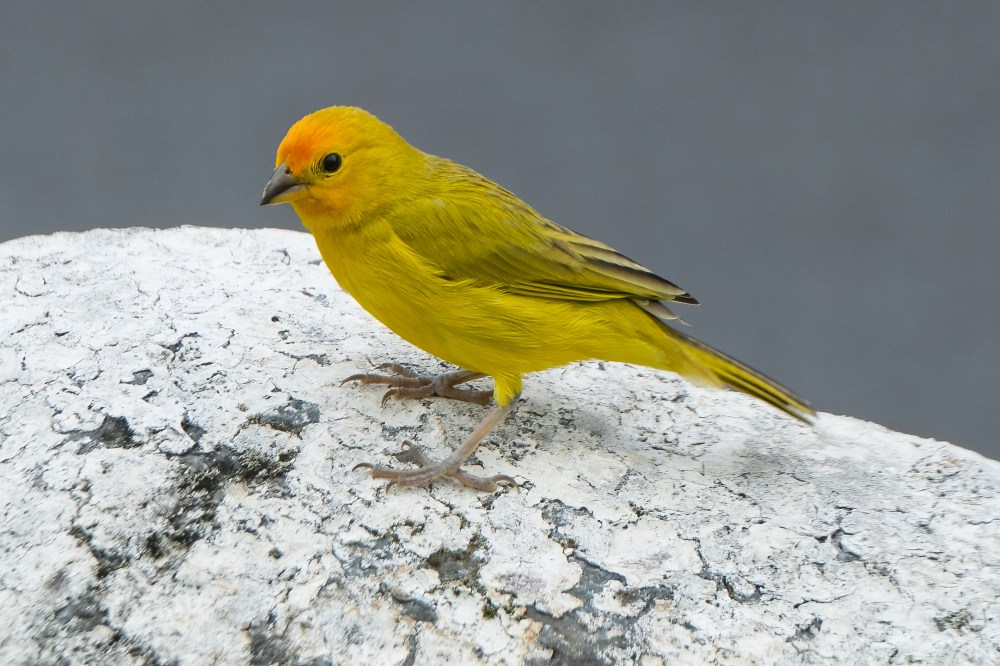
I drove into central Hilo and parked up at the urban Wailoa River SWP, a nice green space with manicured lawns and bridges over various inlets. As soon as I stepped out of the car, I was greeted by my first pair of saffron finches. Man, this species is a gorgeous colour. And that touch of orage on the head. Stunning birds.
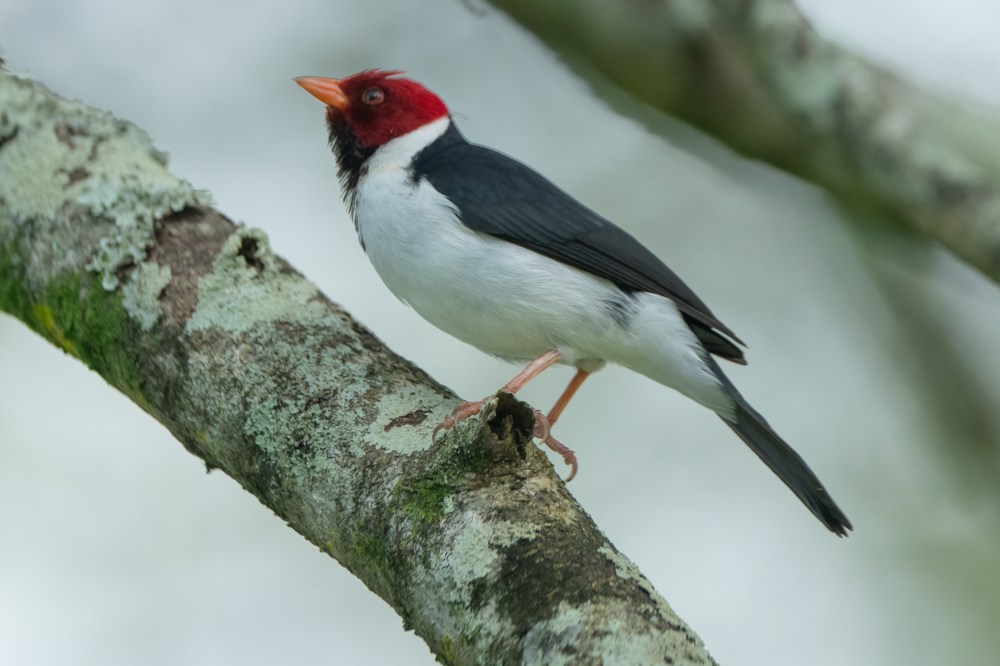
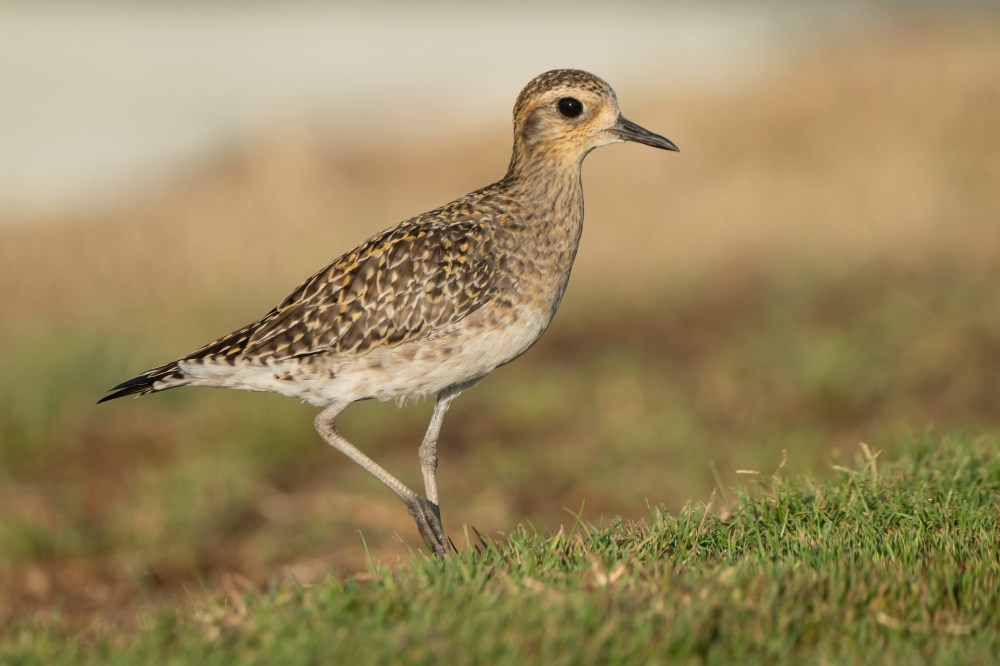
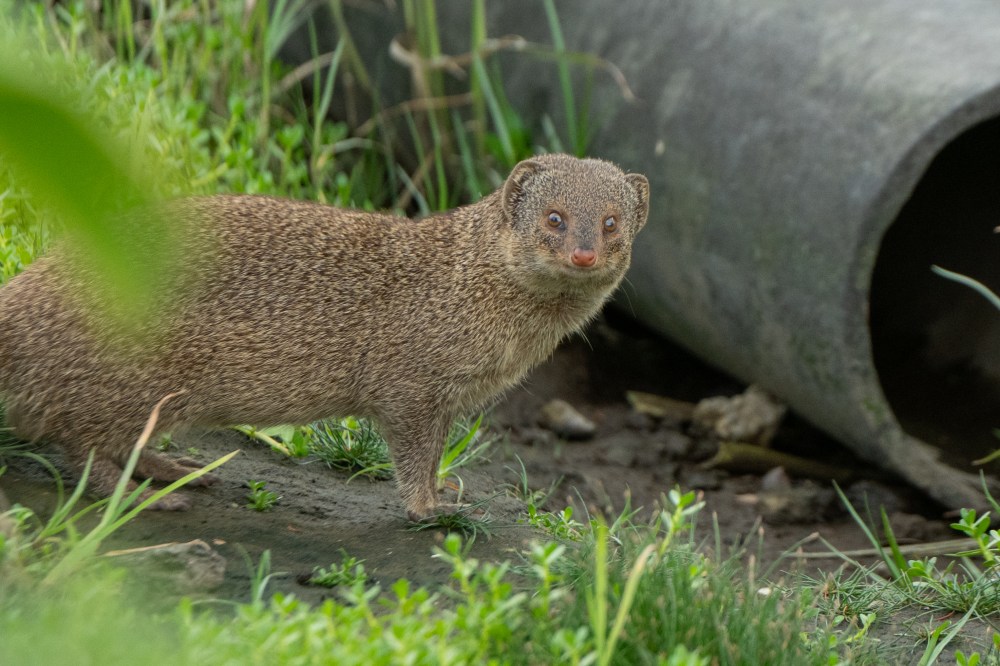
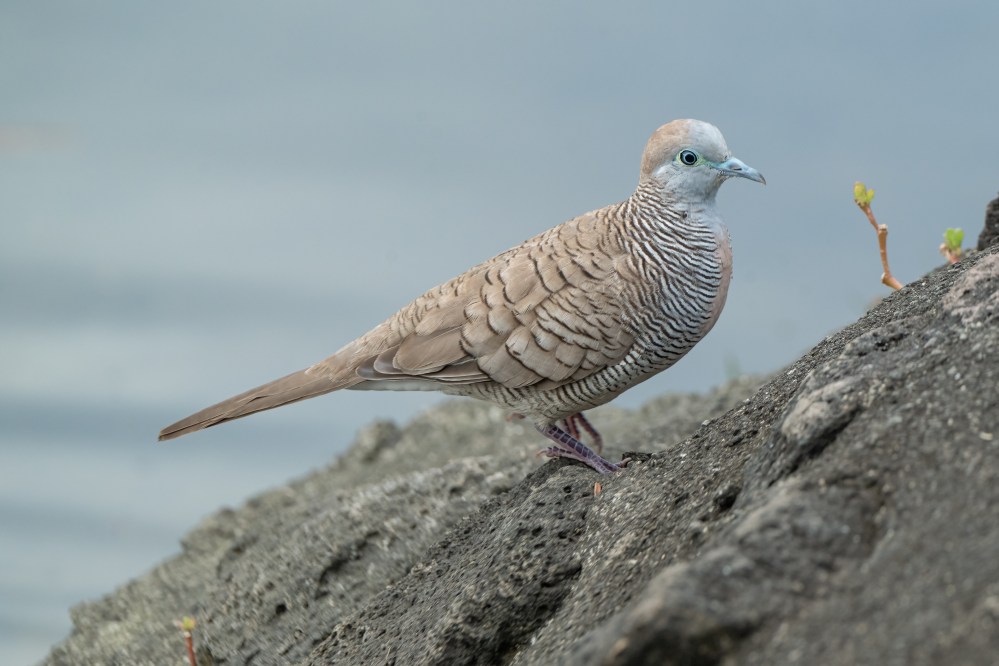
I then soon after connected with my first yellow-billed cardinal – really cool species – which was feeding in amongst a flock of yellow-fronted canaries, a species I had last seen in its African homeland. Common waxbills also flitted around the lawn areas where pacific golden plovers were also looking for food. Spotted and zebra doves joined them on search, with common mynahs, a very common bird across Hawaii, barging their way into proceedings. Interesting to see so many small Indian mongoose during my time in Hawaii, not least in this park where they were quite happy running between drainage pipes looking for their next meal.
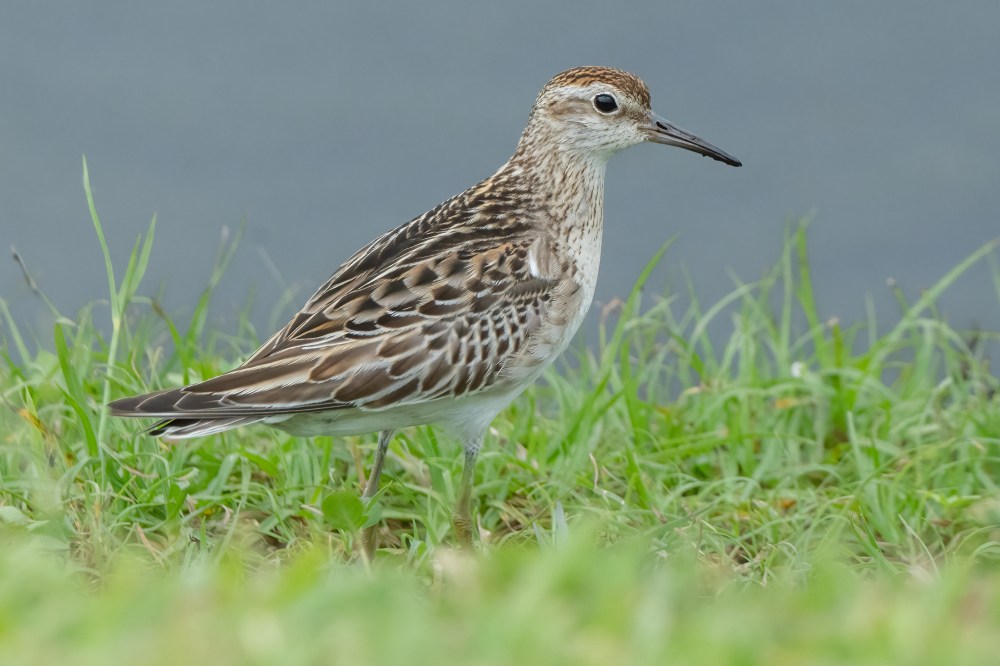
The biggest surprise came near the end of my visit. A passer-by asked me if I was looking for the rare bird. I wasn’t sure which he was referring to but he then told me his wife had found whatever it was further along. I thanked him, walked on and met his wife who then showed me a photo she had just taken of sharp-tailed sandpiper!?!? This is a great species to see here – fairly regular vagrant to Hawaii, blown off course from its more typical Australasia > Arctic route. I was blown away with the views it gave – what a treat. This is what birding is about: surprise.
Hard to follow that. What a way to end my birding day on the big island, and my last bit of proper birding before my trip back to the UK.
Humpback Whales of Maui


Thanks to everyone I met along the way, and to the crew I worked with who let me leave a little early on the last day of the film shoot.
Species list
- Northern shoveler
- Pintail
- Hawaiian Goose
- Hawaiian Coot
- Black-necked stilt
- Wandering tattler
- Sharp-tailed sandpiper
- Pacific golden plover
- Black-crowned night heron
- Western cattle egret
- I’iwi
- Apapane
- Hawaii Amakihi
- Maui Alauahio
- Hawaii Akepa
- Akiapolaau
- Omao
- Hawaii Elepaio
- Hawaiian Hawk
- Red junglefowl (domestic mix)*
- Wild turkey*
- Black francolin*
- Grey francolin*
- Erckel’s spurfowl*
- Kalij pheasant*
- Common mynah*
- Zebra dove*
- Spotted dove*
- House sparrow*
- Saffron finch*
- Yellow-fronted canary*
- Northern cardinal*
- Red-crested cardinal*
- Yellow-billed cardinal*
- Northern mockingbird*
- Eurasian skylark*
- House finch*
- Warbling white-eye*
- Scaly-breasted munia*
- Common waxbill*
- African silverbill*
- Java sparrow*
- Warbling white-eye*
- Japanese bush warbler*
Mammals
- Small Indian mongoose
- Humpback whale
Reptiles
- Green sea turtle
 Wildlife Wander